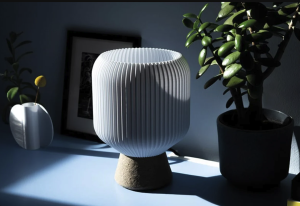
The following article explores the concept of manufacturing table lamps using 3D printed recycled plastic. This method represents a convergence of additive manufacturing techniques, sustainable material sourcing, and functional design, aiming to offer an alternative to traditional lighting production.
The pursuit of sustainable manufacturing practices has become a significant focus across industries. One promising avenue is the integration of additive manufacturing, commonly known as 3D printing, with recycled materials. This approach offers a pathway to reduce waste, decrease reliance on virgin resources, and foster localized production.
Additive Manufacturing for Reduced Waste
Traditional manufacturing methods, such as injection molding or subtractive machining, often generate considerable material waste. 3D printing, by its nature, builds objects layer by layer, utilizing only the necessary material. This “additive” process inherently minimizes scrap, making it a more resource-efficient option. For intricate designs, the waste reduction can be substantial compared to subtractive techniques that carve material away from a larger block.
The Role of Recycled Plastics
The global accumulation of plastic waste presents a significant environmental challenge. Repurposing these plastics into functional products offers a dual benefit: reducing landfill burden and providing a sustainable material source. Various types of plastics are suitable for recycling and subsequent use in 3D printing, including polyethylene terephthalate (PET), high-density polyethylene (HDPE), and acrylonitrile butadiene styrene (ABS). The preparation of these materials for 3D printing typically involves collection, cleaning, shredding, and extrusion into filament.
Localized Production Benefits
3D printing facilitates decentralized manufacturing. Small-scale designers and local workshops can produce goods on demand, reducing the carbon footprint associated with long-distance shipping from centralized factories. This model also allows for greater responsiveness to local market demands and fosters community-based economies. The ability to print items locally can shorten supply chains and offer customisation options not readily available through mass production.
Material Selection and Preparation
The success of 3D printing recycled plastic table lamps hinges on the careful selection and preparation of appropriate materials. Not all recycled plastics are equally suited for printing, and their characteristics directly impact the final product’s quality and functionality.
Sourcing Recycled Plastics
Recycled plastics can be obtained from various sources, including post-consumer waste (e.g., plastic bottles, packaging) and post-industrial waste (e.g., manufacturing scraps). The purity and consistency of the recycled material are critical. Contaminants can lead to print failures, nozzle clogging, and compromised structural integrity. Therefore, effective sorting and cleaning processes are essential at the collection stage.
From Waste to Filament: The Recycling Process
Once collected, recycled plastics undergo a series of transformations to become usable 3D printer filament. This typically involves:
- Shredding: Plastics are reduced into smaller flakes or pellets.
- Washing and Drying: Contaminants are removed, and moisture content is minimized, as moisture can cause bubbling and reduce print quality.
- Melting and Extrusion: The cleaned flakes are melted and extruded through a die to form a continuous strand of filament with a consistent diameter. This diameter consistency is paramount for consistent material flow during printing.
- Cooling and Spooling: The extruded filament is cooled and wound onto spools, ready for use in a 3D printer.
Impact of Plastic Type on Print Quality
Different types of recycled plastics possess distinct thermal and mechanical properties that influence their suitability for 3D printing and the characteristics of the final lamp.
- PET: Offers good clarity and rigidity, making it suitable for translucent lamp shades.
- HDPE: Known for its durability and flexibility, though it can be challenging to print cleanly due to warping tendencies.
- ABS: A robust material with good impact resistance, often used for structural components of lamps. However, ABS can emit fumes during printing and requires good ventilation.
- PLA (Polylactic Acid): While often considered a “bio-plastic” rather than a recycled plastic in the traditional sense, recycled PLA is becoming increasingly available. It is easy to print and offers good aesthetic qualities.
Design Considerations for 3D Printed Lamps
Designing a table lamp for 3D printing with recycled plastic requires a holistic approach that integrates aesthetic, functional, and manufacturing constraints. The design is not merely an artistic endeavor but a blueprint for a tangible object that must perform its intended purpose.
Optimizing for 3D Printing
Designs must account for the layer-by-layer nature of 3D printing. Overhangs, thin walls, and unsupported structures can lead to print failures or require extensive support material, which increases waste.
- Minimal Overhangs: Designs should aim to minimize angles exceeding 45 degrees without support, or incorporate built-in supports that are easily removable.
- Appropriate Wall Thickness: Walls must be thick enough to provide structural integrity but not so thick as to waste material or increase print time unnecessarily. Think of the lamp’s walls as the skeletal framework; they must be robust enough to stand, yet not overbuilt.
- Interlocking Parts: Complex lamps can be designed as separate, interlocking components, which simplifies printing and assembly. This resembles building with modular blocks, each piece contributing to the whole.
Functional Requirements: Light Distribution and Heat Management
A table lamp’s primary function is illumination. The design must facilitate effective light distribution and safely manage heat generated by the light source.
- Light Diffusion: The lamp shade’s geometry and surface finish influence how light is diffused. Textured or frosted surfaces can scatter light more evenly, reducing glare. The material’s translucency plays a key role here; a thick, opaque shade will block more light than a thin, translucent one.
- Ventilation: LED bulbs, while more energy-efficient, still generate heat. Adequate ventilation is crucial to prevent overheating, which can degrade the plastic over time or even deform it. Incorporating vents or open designs allows for airflow, akin to how a chimney allows smoke to escape.
- Socket and Wiring Integration: The design must securely accommodate the lamp’s electrical components, including the bulb socket, wiring, and switch. This requires precise measurements and consideration for assembly ease.
Aesthetic and Ergonomic Principles
Beyond functionality, the lamp’s aesthetic appeal and user interaction are vital.
- Form and Silhouette: The lamp’s shape and overall profile contribute to its visual impact. Whether sleek and minimalist or intricate and artistic, the form should complement its intended environment.
- User Interface: Controls such as switches or dimmers should be easily accessible and intuitively placed. Think of how a hand naturally interacts with an object; controls should fall readily to the touch.
- Stability: The lamp’s base must be wide and heavy enough to ensure stability, preventing accidental tipping. A secure base is the anchor that grounds the design.
The Manufacturing Process: From Digital Model to Physical Lamp
The manufacturing process for 3D printed recycled plastic table lamps bridges the gap between digital design and physical reality. It involves several distinct stages, each contributing to the final product.
Slicing the Digital Model
Once the 3D model is finalized, it is processed by “slicing software.” This software converts the digital design into a series of thin, horizontal layers and generates the G-code, which is a set of instructions understood by the 3D printer. The slicing software allows you to define printing parameters such as:
- Layer Height: Determines the resolution and smoothness of the print. Thinner layers result in finer details but longer print times.
- Infill Density and Pattern: Controls the internal structure of the print, impacting its strength and weight. A higher infill percentage makes the object more solid and durable.
- Print Speed: Affects print time and sometimes quality. Slower speeds often yield better results, especially for intricate details.
- Support Structures: If necessary, the software can automatically generate support structures for overhangs, which are removed after printing.
3D Printing the Components
The G-code is then fed into the 3D printer. The printer heats the recycled plastic filament, melts it, and extrudes it layer by layer onto a heated build plate. Each layer solidifies as it cools, adhering to the previous one, gradually building up the lamp’s various components. This process is like laying bricks one by one to construct a wall, each layer building upon the last. The printer’s precision dictates the accuracy of cuts and edges.
Post-Processing and Finishing
After printing, the raw components may require post-processing to achieve the desired finish and functionality.
- Support Removal: If support structures were used, they are carefully removed. This can be done manually or with tools. Care must be taken not to damage the actual part.
- Sanding and Smoothing: Layer lines are often visible on 3D printed objects. These can be smoothed out through sanding, polishing, or chemical treatments to achieve a more refined surface.
- Assembly: The individual printed components are assembled along with the electrical fittings (bulb socket, wiring, switch). This stage often involves fasteners, adhesives, or interlocking mechanisms designed into the prints.
- Quality Control: Each finished lamp undergoes inspection to ensure it meets design specifications, functional requirements, and safety standards. This includes checking electrical continuity, structural integrity, and aesthetic appeal.
Challenges and Future Outlook
While 3D printed recycled plastic table lamps offer environmental and economic benefits, the technology faces several challenges that require ongoing research and development. Addressing these issues will broaden their adoption and improve product quality.
Material Consistency and Quality Control
The primary challenge with recycled plastics is maintaining consistent material properties. Variations in the source plastic’s composition, degree of degradation from previous use, and presence of impurities can lead to:
- Inconsistent Filament Diameter: This can cause extrusion problems, leading to under-extrusion or over-extrusion during printing, affecting print quality.
- Reduced Mechanical Properties: Recycled plastics can exhibit lower tensile strength, impact resistance, and heat deflection temperature compared to virgin materials, limiting the product’s lifespan and structural integrity.
- Color Variation: Achieving consistent color in products made from mixed recycled plastics can be difficult without additional pigmentation. This means that a batch of lamps might have a slightly different hue from a previous one.
Developing advanced sorting technologies, refining cleaning processes, and improving plastic compounding techniques are crucial for enhancing material consistency. This is akin to refining raw ore; impurities must be removed to yield a strong and reliable metal.
Overcoming Technical Limitations in 3D Printing
Current desktop 3D printing technologies, while accessible, have certain limitations when working with recycled plastics:
- Warping and Adhesion Issues: Recycled plastics, especially those with high shrinkage rates (e.g., ABS), can warp or detach from the print bed during cooling, leading to failed prints. This is like a freshly baked cake shrinking and cracking as it cools.
- Printer Calibration: Optimizing printing parameters (temperature, speed, fan settings) for different types of recycled plastics can be time-consuming and requires expertise. Each plastic composition acts differently under heat and pressure.
- Surface Finish: Achieving a perfectly smooth, injection-molded quality finish directly from a 3D printer using recycled plastics is difficult. Post-processing is almost always required.
Advancements in printer hardware (e.g., enclosed build chambers, advanced bed adhesion systems) and slicing software (e.g., adaptive slicing algorithms) aim to mitigate these issues.
Regulatory Compliance and Safety Standards
As these products enter the market, adherence to electrical safety and product longevity standards is paramount.
- Electrical Safety: Lamps must comply with national and international electrical safety regulations (e.g., UL, CE) to prevent hazards such as electric shock or fire. This involves careful component selection and proper assembly.
- Flammability: Plastics, especially recycled ones, can have varying flammability ratings. Understanding and addressing this is critical for product safety. Manufacturers must ensure their materials meet fire resistance standards.
- Durability and Longevity: Ensuring that recycled plastic lamps can withstand typical household use for a reasonable lifespan requires robust design and material choices. This means not just that the lamp works, but that it continues to work reliably over time, weathering daily wear and tear.
Establishing industry-specific guidelines and certifications for 3D printed products made from recycled materials will build consumer trust and facilitate market acceptance.
Potential for Market Expansion and Innovation
Despite the challenges, the future outlook for 3D printed recycled plastic table lamps is promising.
- Circular Economy Integration: These products embody the principles of the circular economy, where resources are kept in use for as long as possible, extracting maximum value, then recovered and regenerated. This turns waste into a valuable resource.
- Mass Customization: 3D printing enables the production of unique, customized lamps tailored to individual preferences, offering a level of personalization unattainable by mass production. Your lamp can be uniquely yours.
- Design Freedom: The geometric flexibility offered by 3D printing allows for intricate and artistic designs that would be difficult or impossible to produce with traditional manufacturing methods. Designers are limited more by imagination than by tools.
- New Business Models: The technology supports localized production and fosters new business models centered on sustainable practices and on-demand manufacturing. This could lead to a proliferation of small, innovative design studios.
Continued research into advanced recycling technologies, polymer science, and 3D printer capabilities will progressively overcome current limitations, paving the way for a broader array of sustainable and innovative lighting solutions.